Insights

From Finance to Luxury Real Estate: The Career Change I Never Planned

George Azar reflects on how a career in private banking and asset management shaped his move into luxury real estate.
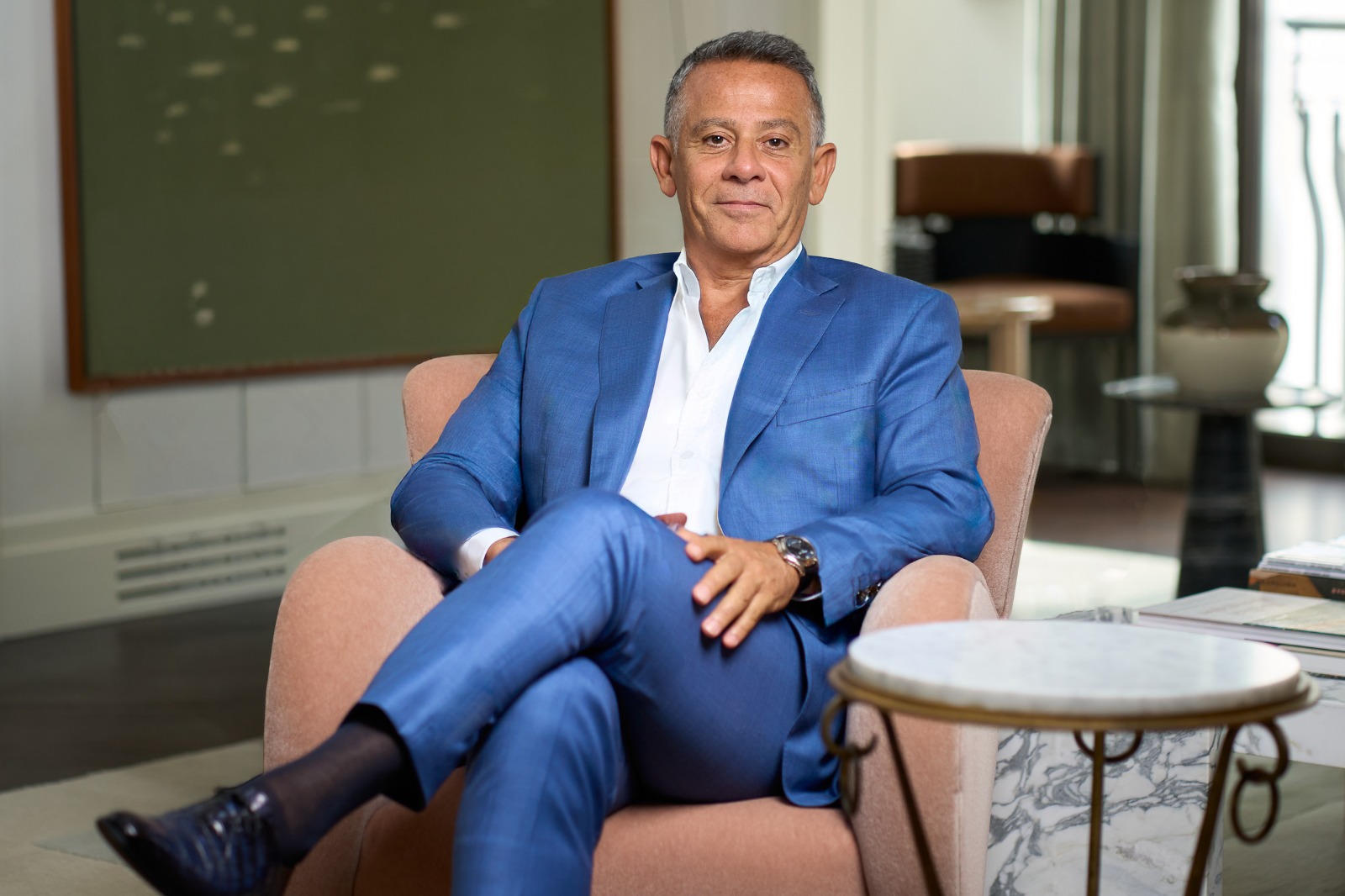
I never set out to build a luxury real estate business. For most of my early career, my focus area was finance. I studied finance and economics, began my career in private banking and eventually built an asset-management business serving governments, family offices and major institutions across the Gulf. When a friend first suggested that I consider the real estate industry, I hesitated: that was not an arena I felt I had any expertise in. It was not in my nature to take uncalculated risks; I would need to do plenty of research before even considering the option. But sometimes the most interesting opportunities appear when the business you understand begins to change. You need to recognize those openings and capture them with purpose and precision. My move into luxury real estate was not a pivot away from finance. Rather, it was an extension of the way I had learned to think about capital, risk, and relationship-building.

Network: The Most Important Word in Any Industry

I was sent to boarding school in Switzerland at the age of 14, partly because of the war in Lebanon. I was young, living away from my family and surrounded by students that came from the Gulf, Europe, Asia and the United States. Many of these boys were from prominent families, even royal families, which in many ways foreshadowed my future path. That environment exposed me to people whose cultures, expectations and personalities were very different from my own. And it was where I first started to curate my network, even before I fully understood the significant role it would play later in my life. Many of my strongest relationships were within the Arab community. I was mingling with the best, and we were all being groomed for success. Even after I went to university and excelled in finance and economics, I always understood that the backbone of finance in the real world was not just about numbers. It was, perhaps moreso, about people: understanding how clients think, what they fear, what they want to achieve and how they make decisions. This would eventually shape my approach to luxury real estate.

The Difference Between Access and Trust

I began my professional career at Merrill Lynch, offering me the perfect opportunity to cultivate my skillset. As part of their recruitment process, Merrill prioritised the ability to bring in new clients. The network that I had accrued during my time in boarding school and university gave me a strong footing on which I could start my career. But the network only provided access to important people. It did not automatically earn me their trust. For that, I had to establish my credibility as a professional. I did that by treating each relationship as if it were the only one I was managing, with complete confidentiality and discretion. When advising a client, I focused fully on their needs and best interests, and I never used one client’s information to benefit another. It was also important for me to not try and be a ‘salesman’, pushing products that my clients did not want. My management kept promoting equities and wanted my clients to buy stocks, but I knew that my network had no interest in that, and I refused to try and convince them otherwise. Appreciating my willingness to place their interests and investment goals above those of my bank, my clients came to respect my advice and were eager to work with me again. That kind of relationship-building goes far in many industries, but it is of special importance in both banking and real estate.

Being a Specialist’s Specialist

After Merrill Lynch, I moved to Swiss Bank Corporation and later to UBP, which is where I spent much of my banking career. I focused on serving large family offices and government offices, and I only sold one product: hedge funds. As someone who always looked at the numbers, I understood how hedge funds operated, the possible risks, and the potential rewards. And I developed relationships with all the top hedge funds in the world. The idea of focusing on a single product may seem counterintuitive - would it not make more sense to diversify your offering so you’re not at risk if your main product goes sideways? Possibly, but I have always believed that specialists are more valuable than generalists. If you are ill, you want to see the doctor who understands your particular condition. You do not necessarily want someone who claims to know a little about everything. The same is true in finance and real estate. Clients with substantial assets do not need someone who can discuss every product in the market. They want someone who understands their specific challenge better than anyone else. This philosophy helped me grow the asset-management business in the Gulf from approximately $60 million under management to around $5 billion. This also became one of the central principles I later applied to real estate: in a crowded market, focus creates authority.

How I Learned to Trust My Instincts

One of the most important lessons I learned in finance was the value of acting on informed conviction. At UBP I was based in Dubai, but there were several layers of management above me based in different parts of the world. While being part of an international organisation held a certain level of esteem, I quickly recognized that this was not an ideal scenario for building relationships in the GCC, where HNWIs and UHNWIs only want to execute large transactions with those who have final authority to sign such deals. Multiple layers of bureaucracy did not, in my view, position me for success in a highly competitive market. This became especially evident when I had the opportunity to work with a very important regional client, but was advised against pursuing that relationship as the bank had no business there at the time. I acted against that advice and attended a meeting at my own expense, because I instinctively felt that I could secure this account and earn a very notable client. I was right, and the deal was signed. However, my insubordination did not go unnoticed. The same instinct told me that I could grow this account even more, but I would have to bypass my seniors once again. This led to me taking what was at that time one of the biggest risks of my career: I requested a private meeting with the head of the bank to explain my case. Impressed by my assertiveness and swayed by my argument, he agreed to a meeting with the client without involving any other members of management. The endeavour was successful and, to help replicate that same level of success across the GCC, I was promoted to Head of Middle East Operations. The takeaway here is not that every instinct is correct. Rather, it’s the importance of acting on potential opportunities without being tied down by the need for formal approvals.

Why I Left Banking

The global financial crisis changed the environment in which I had built my career, and the market for hedge funds changed dramatically. I remained at the bank for several years, helping to manage the consequences of the crisis. Eventually, however, I realised that the old model no longer offered the same opportunity. At that point, I considered buying a bank. My background made the idea logical, but the capital requirements and operating costs were substantial. I realised I might become only a small shareholder in a very large institution. So I asked myself a different question: what business could provide some of the economic characteristics of banking – strong margins, valuable relationships and the ability to work with substantial assets – without requiring the same cost base and infrastructure? The answer, it turned out, was real estate. What seemed at first like completely uncharted territory became strikingly familiar once I understood the importance of the relationships that drive every property transaction. Today, I still think like a banker. I study markets, classify opportunities, assess risk and focus on liquidity. I look for alignment between the interests of the client, the developer and the business. The career change was unexpected. However, the principles behind it remain as firm as they were when I first started out. In future posts, I will examine why I purchased Dubai’s Sotheby International and how early mistakes led to eventual success.
More updates

News & Insights